A week after Julien Alfred's name got attached to an Olympic 100-meter gold medal, it's worth remembering that St. Lucia's athletic culture isn't only built in stadiums with television cameras pointed at it. Sometimes it's one person, a headlamp, and a coastline.
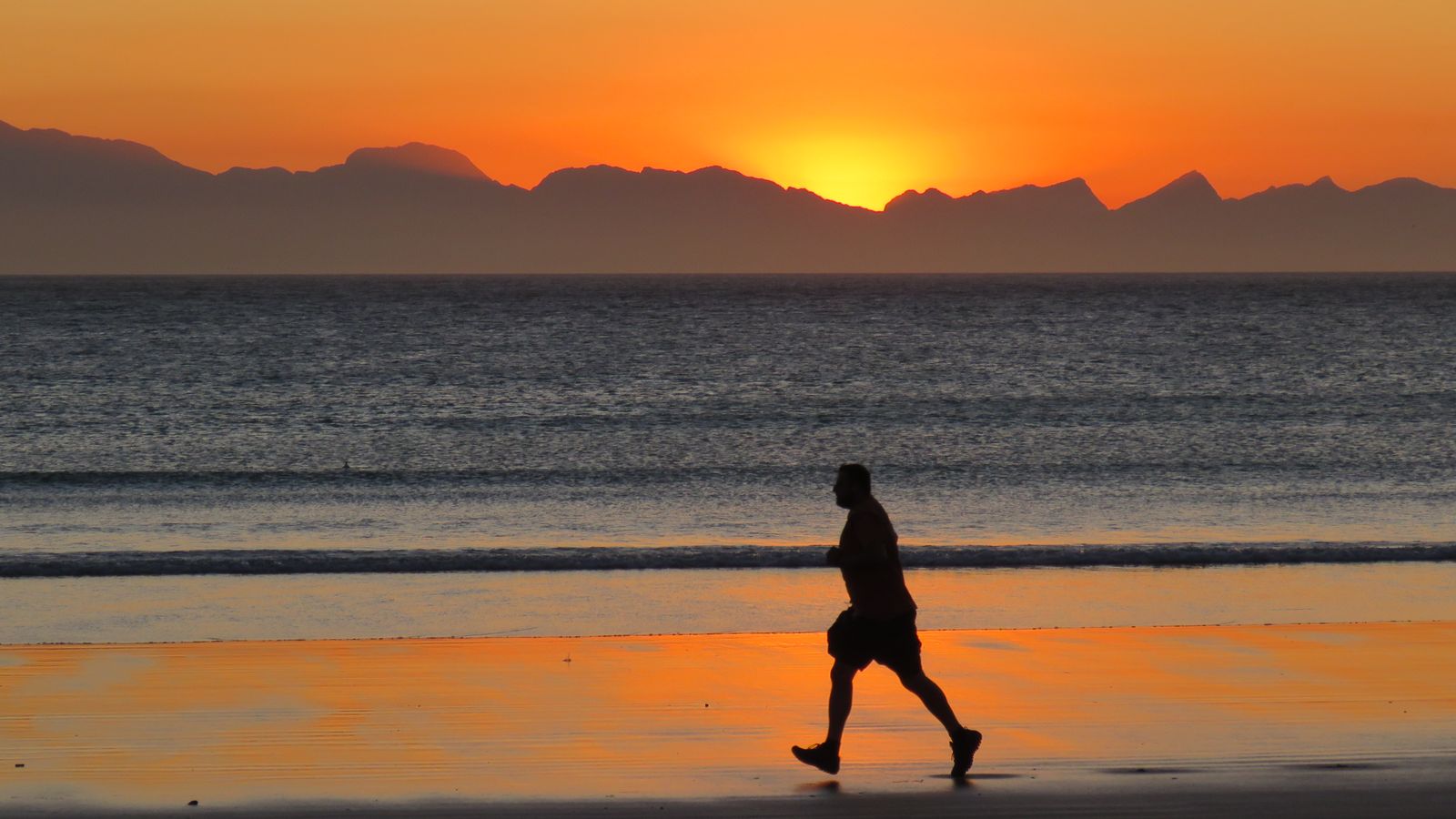
On August 30, 2026, at 7:30 AM, an ultra-runner named Jordan Florenville set off from Point du Cap in Cap Estate on something called the Iyanola 100 — a self-supported attempt to run a complete 100-mile loop around the entire island of St. Lucia, with a 36-hour cutoff to get back to where he started.
What "Iyanola" Means
Before it was St. Lucia, the island's Indigenous Kalinago name was Iyanola — often translated as "land of the iguanas." Naming a 100-mile lap of the island after it isn't an accident. This is a route designed to be a love letter to the whole island, not just the resort strip.
The course isn't a closed loop on a track or a certified road-race circuit. It's the actual perimeter of St. Lucia — thirteen named checkpoints strung together: Point du Cap, Cas En Bas, Dennery, Micoud, Vieux Fort, Labourie, Choiseul, Soufrière, Canaries, Anse La Raye, Cul de Sac, Castries, and Gros Islet, before closing the loop back at Point du Cap. Coastal roads, interior climbs through Soufrière's volcanic terrain, small-town main streets — all of it, in one continuous push.
Not His First Ultra
If the name Jordan Florenville sounds familiar, it might be because this isn't his first extreme endurance feat — it's just his biggest one on home soil. Florenville, a Babonneau native, ran the 90-kilometer Qatar East to West Ultraon December 13, 2024 — Saint Lucia's National Day — crossing the desert from Doha on the east coast to Dukhan Beach on the west, hamstrings strained by conditions he later called manageable.
Before that, he'd already climbed Mount Gimmie, Petit Piton, and Gros Piton in a single day — St. Lucia's own Three Peak Challenge — and summited Kilimanjaro as part of a team the year before that. The pattern isn't hard to read: pick something absurd, then go do it.
After the Qatar finish, Florenville told St. Lucia Times something that could have come straight out of the Julien Alfred story: "Honestly, there's always a sense of pride when I represent Saint Lucia. I feel duty-bound, when people ask me where Saint Lucia is or where it's located, to remind them." Different sport, different continent, same instinct — put the island on the map, one absurd physical feat at a time.
The Math of 100 Miles in 36 Hours
A 36-hour window for 100 miles sounds generous until you do the arithmetic against St. Lucia's terrain. The island isn't flat. The Soufrière-to-Choiseul stretch alone runs through some of the steepest, most humid climbing terrain in the Eastern Caribbean. Add in tropical heat that doesn't relent overnight the way temperate-zone ultras get a break, and a 36-hour cutoff stops looking generous and starts looking like exactly the number the course demands.
As of this writing, Jordan is still out on the course — trackable live via Strava Beacon while he works his way around the loop. Whatever mile marker he's at right now, the honest version of this story is the same one every ultra tells: the race against the clock is really a negotiation with your own body about how much more it's willing to give.
Why This Belongs on PUSH
This is the exact throughline PUSH keeps coming back to. Julien Alfred's 10.72 seconds and Jordan's 100-mile loop look like they have nothing in common — different sports, different time scales, different kinds of suffering. But they both come out of the same small island, and they both come down to the same unglamorous truth: the athletes who last are the ones who manage the damage, not just the ones who can produce the effort in the first place.
At sprint distance, that's lactate buffering and the thirty-minute recovery window. At mile 70 of an unsupported island loop, it's muscle damage management, joint recovery, and finding a way to keep moving when everything in your legs is telling you to stop. Different math, same discipline.
Follow the Loop
You can track Jordan's live position via his Strava Beacon link. Organizers are also welcoming support along the route — runners, cyclists, and spectators rotating in for two- or four-hour blocks to pace him through sections of the loop — with a documentary reportedly in production covering the attempt.
We'll follow up on this piece once the loop closes — one way or another, the story of what it takes to move 100 miles around an entire island in 36 hours is worth telling in full.
Editor's note: this is a live dispatch published while the attempt is still in progress. Details here are drawn from event materials shared with PUSH; we have not independently verified all figures and will correct anything that needs correcting once the full result is confirmed.