
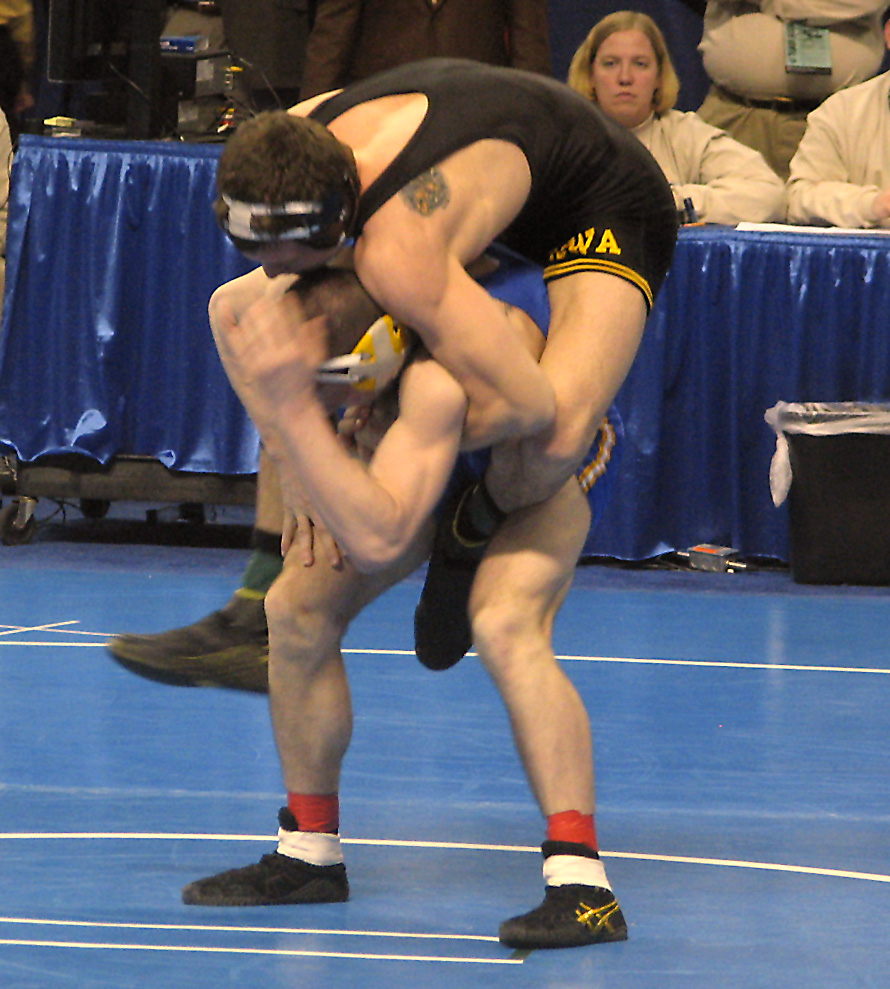
At the 2026 NCAA Championships in Cleveland, Michael Caliendo advanced to the 165-pound finals for Iowa before finishing as runner-up. On its own, that's a strong season. In context, it's the 35th consecutive NCAA tournament in which Iowa has produced a finalist — a streak that traces back to 1990 and has now survived 35 different rosters, three-plus different head coaching eras' worth of turnover, and every rule change the sport has gone through since.
The Numbers Underneath the Streak
Iowa finished fourth as a team at the 2026 Championships, going 11-6 overall and 4-3 in the Big Ten, and crowned seven All-Americans at nationals. That's actually a modest year by Iowa's own standard — and the streak didn't care. It has now produced a finalist in 50 of the last 51 NCAA tournaments dating back to 1975.
Zoom out further and there's an even longer streak running underneath it: Iowa has crowned at least one All-American in 55 consecutive NCAA tournaments, a run stretching back to 1972 and totaling 339 All-America honors along the way. The program has 24 national championships — second all-time — but the finals streak and the All-American streak are arguably the more remarkable numbers, because they don't require a great year. They just require Iowa wrestling to never have a genuinely bad one, for over half a century.
What a Streak Like This Actually Requires
A single dominant class wins a few championships. A streak that survives 35 or 55 straight years survives injuries, off-years, and coaching transitions by design, not by accident — which means the constant isn't the talent walking in the door. It's the system built around keeping that talent healthy, conditioned, and peaking in March, year after year, roster after roster. Wrestling punishes bodies as hard as any sport in college athletics: weight cuts, repeated live training, a season that demands athletes be at their absolute physical best in a single-elimination tournament at the end of a grinding schedule. A program doesn't sustain that for five decades without treating recovery as seriously as it treats the mat work.
Nobody expects Iowa. That's the point of this pillar — a midwest program grinding out world-class results with zero interest in whether anyone outside the sport is watching. The streak keeps going either way.